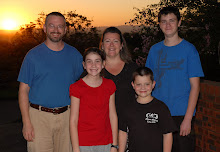
So, here's a question....How much time must elapse before you can say "That's normal"? I was thinking about that yesterday. I've heard that if you do something for two weeks straight, you've established a habit. But, is that the same as saying that what you are doing is normal?
The past two weeks for me have been "back to business as usual" in that we have begun surgeries and a work day is from 07:30 to 17:00. Our surgery schedule hasn't necessarily filled those hours, but there are other chores that must be done as well to make sure the surgeries can take place. This means that during the week I can only manage to work, eat dinner with the family (lately in the cabin for a little quietude and communication) and then John and I begin to move the kids in the direction of bed. I think our friends feel a little neglected, but I hope they understand that we are trying to sort out "normal".
Saturday I realized that I had not been outside of the ship's walls (or bulkheads?) for 10 days! Not even to go out onto the outer decks! So, the kids and I took ourselves up to deck 8 twice yesterday to play and get fresh air. Mind you, it's very warm air, but there was a great breeze!
I'll let you know when we figure out normal. Who knows? Maybe there's no such thing! It could be just a figment of our imagination.
Jenny
Sunday, March 8, 2009


Wednesday, March 4, 2009
Screening

 waiting in the lines
Almost two weeks ago now we helped with the big surgical screening that Mercy Ships holds at the beginning of the field service. This screening spanned two long days and saw 2,550 potential surgical patients line up for evaluation. Of those, 443 were scheduled for surgery, many were given referrals to follow-up specialty screenings, but lots were turned away because they were not suitable for surgery for one reason or another. These people were given the opportunity to be ministered to by prayer teams. A couple of screenings were also held in the north part of Benin, but the one we were involved in was the major screening held at the Hall des Arts in Cotonou not too far from the port here. I just recently got my photos cleared so I am now able to write about it. 
 line stretching from stadium - in upper right
The line of patients stretched several blocks down the street from the stadium where stations were set up for medical evaluations, blood draws, scheduling, etc.

 young orthopedic patients
 I floated around most of the day on Thursday, Feb 19, and a few hours on Friday as well making photos of the lines and whatever I could record of the event. I consumed more than a gallon and a half of fluids on Thursday due to the heat and my constant movement. I'm sure it was not easy for some of the sick who came to wait in the lines in the sun. People from the ship passed out water and, to my knowledge, we didn't have any heat casualties. I also really felt for the guys working security who spent the entire day in the sun with no shade. Jenny worked all day both days in the, also very hot, stadium doing surgical scheduling, scheduling the patients who would receive surgery through much of 2009.
 Joey also participated, along with the other junior high kids from the Academy, working with the children who came to the screening, some with medical needs and others who had come with their parents or caregivers.
 The screening was a really incredible event. The orchestration required to do something like this was impressive, but also the kinds of scenes that presented themselves throughout the day were often just amazing. We felt quite blessed to have been able to participate.
 "And this is love: that we walk in obedience to his commands. As you have heard from the beginning, his command is that you walk in love." 2 John :6
John
Tuesday, March 3, 2009
Venice in Africa?


 Sunday Joey and I went with a number of other people from the ship on a boat ride into Ganvie. Ganvie is a village of around 22,000 people that is built mostly over the water. Many of the homes are built on stilts.
 There are a few things that Ganvie has in common with Venice, but not that many. The streets in both are waterways. In Ganvie the market appears to take place actually on the water with the sellers loading their canoes with produce, etc. and selling things out of their canoes.
 Our trip there was interesting, but the agenda of the tour boat driver for us seemed to be for us to visit three craft shops in the village.
 I don't think many of us were particularly interested - we just wanted to see the village and visit with some of the people. Also, it was a bit difficult to know how to feel about our presence there, how welcome we were. It was certainly not as relaxed as a trip to Venice would be. It was nice to go and see Ganvie, but I'm not sure I really want to go back in the same way. Although, I probably will so Jenny, Bethany, and David can see it. I think a much better way to go would involve spending a lot more time and trying to develop some relationships there. That may shed some light on the real situation there and some of the true feelings about yovos visiting their village (yovo is a local word for white person - I'm not sure how much I like being referred to as such everywhere we go, but that's the norm.) Knowing the language too would be such a help. That's one thing I know that I and many others here miss about being in Liberia. Hopefully that aspect of our experience here will improve in the months to come.
John
Monday, March 2, 2009
Ouidah
 This past Saturday I, along with some good friends from gateway in Texas, went to Ouidah to see what we could see in the 4 hours we had use of a vehicle. It took a bit more than an hour to get there, sharing the road with thousands of zemedjans, so we didn't have nearly enough time to really see Ouidah, but we were able to get oriented and get a feel for the place. Ouidah is known in Benin for being the capital of Voodoo and for its history as a major port for the slave trade. There is a Slave Route in Ouidah now marked by monuments at several points that the slaves passed through on their way to the sea to board ships bound for the New World. We passed by the slave market where the route begins and by the other points on the 3km dirt road to the sea and to the final point on the route, the Gate of No Return (pictured above). Below is a photo of another memorial monument on the beach nearby.
 In between the slave market area and the Gate of No Return are the Tree of Forgetfulness (photo below - with not just some random Englishman, that's Sam!), the actual tree of which is no longer there, or if it is it doesn't amount to much.
 It is said that this tree had magical powers and as the slaves circled it, they would have forgotten their identity. Later down the road is the place where slaves were placed in a dark room called the "Zomai" for months so that when they emerged they would be broken and not be able to struggle. The people who did not survive the Zomai ended up in the mass grave which is now marked by a memorial. Further down the road there is the Tree of Return which, upon circling, would guarantee that the souls of the slaves would find their way back to their homeland. (Some of the above info came from "Benin - The Bradt Travel Guide" by Stuart Butler.) In our limited time we didn't find the Zomai or the Tree of Return, but the other points were clear. On the road to the beach we also passed by many not so attractive voodoo statues and a beautiful lagoon where there were men fishing.
 We didn't go to the python temple in Ouidah, but we did glimpse a voodoo ceremony in progress on the way out of town as could be recognized from the brightly colored garb and covered faces of the entranced participants. We didn't linger there.
Voodoo is an animistic religion. There apparently is a belief in a Supreme Being who is helped by lesser gods. People pray to these lesser gods and also engage in sacrifices and rituals to them in hopes that they will pass the messages on to the Supreme Being in their behalf. As this is basically a polytheistic religion, then, in which there is no direct contact with the creator, nothing could be much farther away from Christianity where Jesus is the supreme sacrifice and opened the doors to direct relationship with God. Nevertheless, it is said here that Benin is x% Muslim and x% Christian, but is 100% Voodoo. The spiritual darkness is palpable here, but we know that we walk in the light and need not fear it. It is our prayer that the light of Christ will continue to shine in the darkness here.
John
"For he has rescued us from the dominion of darkness and brought us into the kingdom of the son he loves, in whom we have redemption, the forgiveness of sins." Colossians 1:13-14
Tuesday, February 24, 2009
Our New Temporary Home
There are many similarities between our experience in Liberia and that in Benin so far. There are also a lot of differences. Some of these changes are easier to manage than others. Some of my observations concerning the differences that affect us most are listed below:
 11) Last for now, but certainly not least, French is spoken here along with native tongues, making communication for us decidedly more difficult. We are working on our French as much as time will allow.
John
1) Unlike in Monrovia, our dock in Cotonou is a working dock busy with vehicles and movement of cargo and other hazards. The kids on the ship are much more recreationally limited in the evenings. This is a definite disadvantage for us.
2) Cotonou is more developed than Monrovia in its present state with more modern shops, goods and services available. There is also widespread electrical power here. The standard of living for many may not be appreciably better, however.
3) The beaches nearby are apparently not safe. Hotel pools are available for water recreation, but they are fairly expensive and crowded.
4) There is more to explore closer to the ship here. We are closer to the main part of town.
5) There are no nearby fields to play ball in. There may be one about a 20 minute walk from the ship - much further away than in Monrovia.
6) There is no visible U.N. presence here.
7) Traffic is a bit more intense. There are thousands of motorcycles (called "zemidjans") on the roads here - far more than in Monrovia - making being on the roads feel a bit like robbing a beehive.
8) Most of the main roads are well paved with few potholes to contend with. The sidewalks are still a bit questionable with very large holes here and there so you still have to watch when walking.
9) The weather seems to be a bit hotter here. The sky has been very hazy since we arrived.
10) We have a fishing village at the port here, so we get to watch the fishing canoes go in and out past our ship at various times throughout the day.
11) Last for now, but certainly not least, French is spoken here along with native tongues, making communication for us decidedly more difficult. We are working on our French as much as time will allow.John
Monday, February 16, 2009
Swimming at Hotel du Port


 As it turns out, the beaches here in Cotonou are reported to be unsafe. Rip currents and rocks are part of the reason, I think. As a result, and since things are a bit more developed here than in Liberia, swimming in local hotel pools may become our primary recreational activity on the weekends when we feel like getting out. It is very hot here! The weather is a bit hotter than in Monrovia, so having some water to play in is a good thing as long as you don't forget the sunscreen. Most of the local hotels that have pools will allow you to swim for a fee. The one we went to on Saturday was about a 30 minute walk away and was apparently one of the more reasonably priced. The cost to swim was 1500 CFA franc ($3 U.S.) for adults and 1000 CFA franc ($2 U.S.) each for the kids. So, we could swim all day for $12. One rule that we found a bit odd was that the hotel requires male swimmers to wear speedo style swim suits. The manager is an apparently French lady who allowed us to swim in what we had on for the day as long as we came properly dressed the next time. I don't fully understand the rationale behind the rule, but I'm not sure it would make much difference if I did. You apparently can get a little more modest style bathing suit that is acceptable in the local markets. I'm grateful for that because I'm not sure I care to wear what amounts to a bikini bottom! It's a frightening thought for me, although seeing some of the swimwear there on Saturday, I'm not sure that anyone would be offended.
We and alot of others from the ship had a pretty good time there on Saturday. They have about a 12 or 15 foot high dive platform that David was off of before we noticed. He isn't intimidated by much it seems. All the kids thoroughly enjoyed jumping from it and getting some good pool time.
John
Friday, February 13, 2009
Hospital Open House
Tonight the ship's hospital had an open house for all the crew. It was a lot of fun! There were opportunities to do surgery on stuffed animals, practice suturing, intubate dummies, go through a "digestive tract" course, see prosthetic eyes, play nurse or patient, and the list goes on. Below are some photos of Joey, Bethany, and David taking part in the festivities.
 Above photo by Michel Pelzer


Above photo by Michel PelzerJohn
Subscribe to:
Posts (Atom)